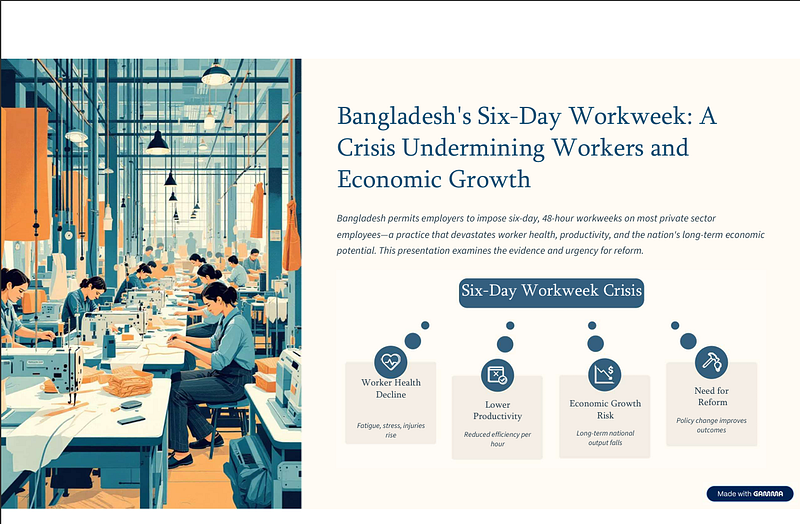
Bangladesh’s legally sanctioned six-day, 48-hour workweek may appear to maximize output, but it is in fact eroding worker health, depressing true productivity, and weakening the country’s long-term economic prospects. What began as a framework to accelerate industrialization has hardened into a system that treats time as infinitely elastic and workers as endlessly expendable.
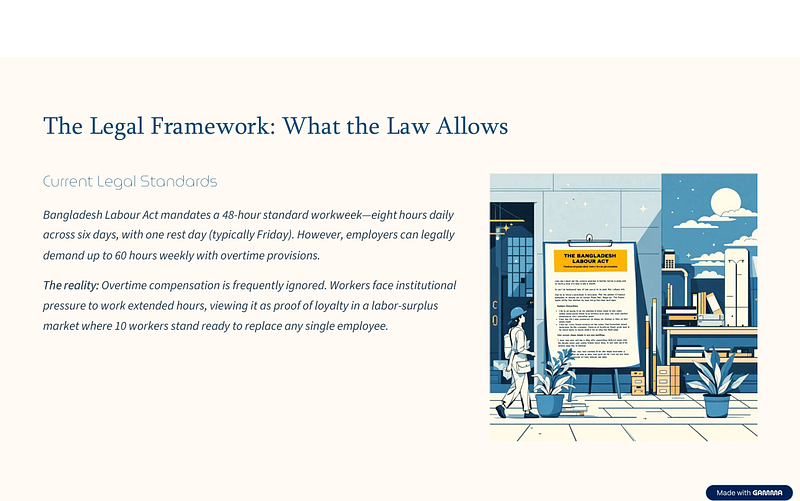
The Bangladesh Labour Act permits eight-hour days across six days with one weekly rest day, typically Friday, and allows up to 60 hours per week with overtime provisions, yet in practice overtime pay and limits are routinely ignored. In a labor-surplus market where replacement workers are plentiful, “voluntary” extra hours become institutional coercion, recast as proof of loyalty rather than a costly drain on wellbeing. This culture normalizes overwork and blurs the line between compliance and quiet compulsion.
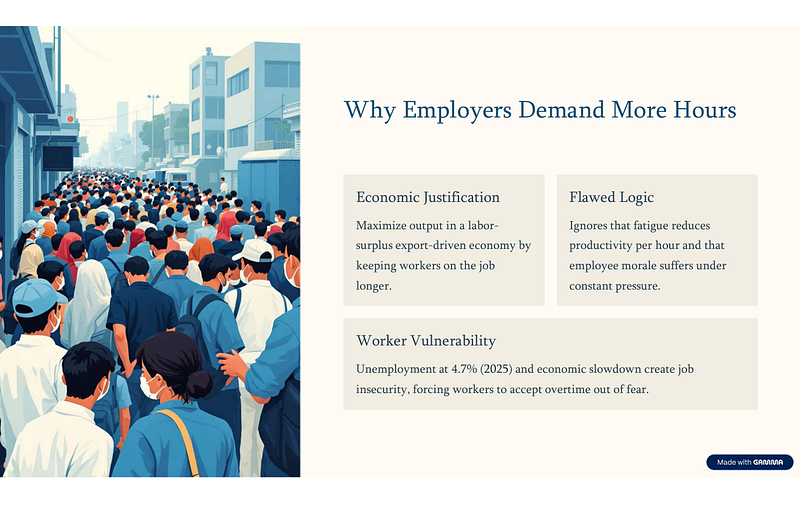
Employers often cite economic necessity — more hours mean more output in an export-driven economy — but this logic fails on both human and empirical grounds. With unemployment at 4.7% in 2025 and a broader slowdown, insecurity compels many to accept excessive hours out of fear rather than choice, entrenching a cycle of anxiety and diminished agency. The outcome is not resilient growth but brittle workplaces built on exhaustion.

The health costs are severe and well-documented: leading bodies such as the WHO and ILO link workweeks above 55 hours to sharply higher risks of heart disease and stroke, contributing to premature mortality on a global scale. Mental health fares no better, with research in journals like The Lancet and the Journal of Occupational and Environmental Medicine associating chronic overwork with anxiety, depression, and burnout, issues that remain stigmatized and under-discussed in Bangladesh. These harms are not abstract — they accumulate in hospitals, homes, and human lives.
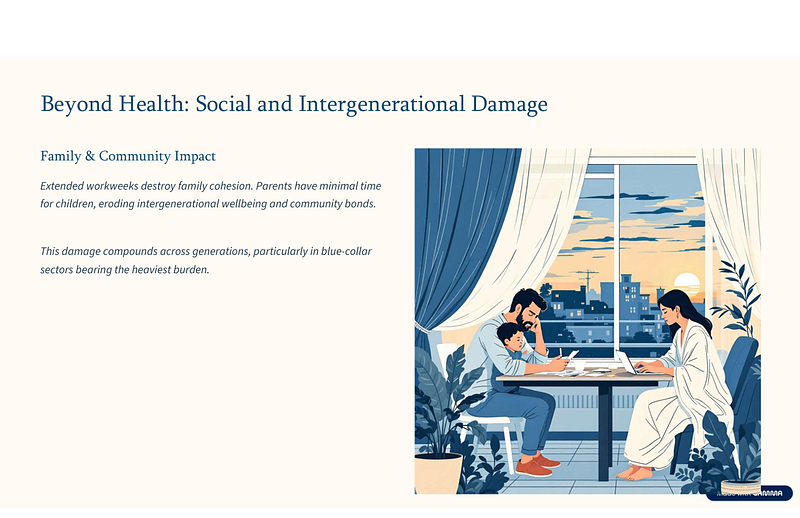
Safety risk rises in labor-intensive sectors where fatigue reduces alertness, slows reaction time, and increases on-the-job injuries. Longer schedules also fracture family cohesion and community bonds, leaving parents with less time and energy for children and eroding intergenerational wellbeing. Over time, the social bill compounds into lost human capital and weakened civic fabric.
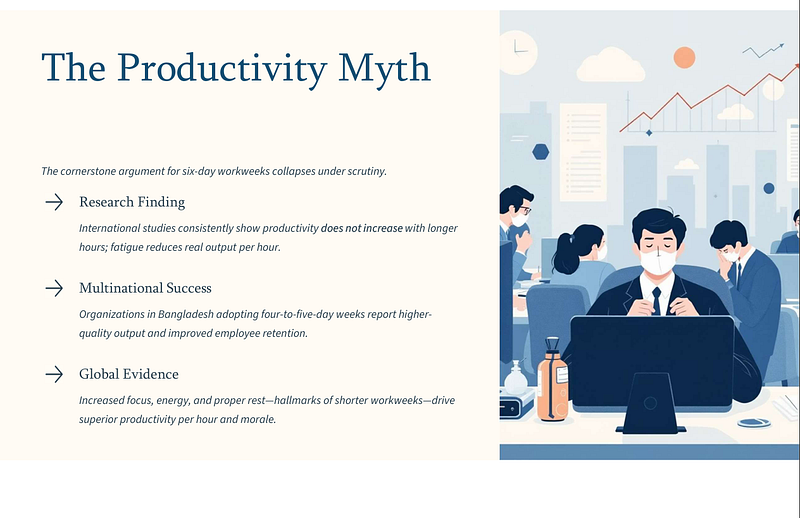
Crucially, the productivity case for longer hours collapses under scrutiny. International findings show that beyond a point, fatigue and disengagement push output per hour down, turning extra time into negative returns. The cornerstone assumption — more hours equal more value — simply does not hold.
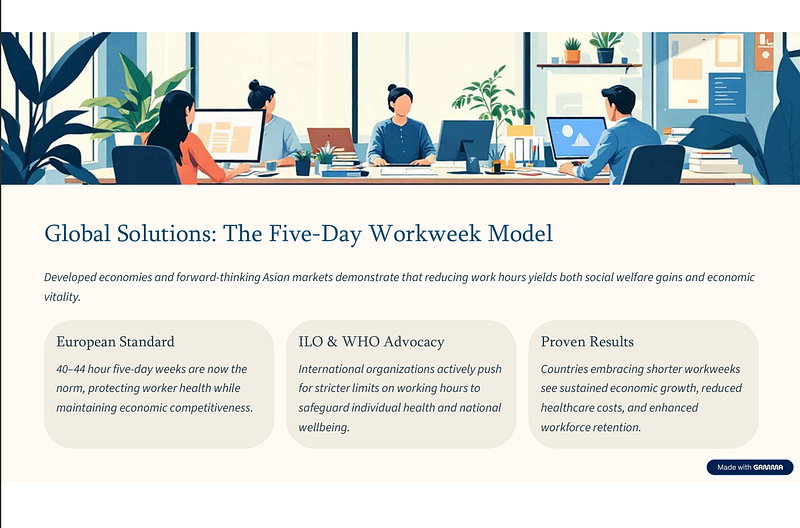
There is a better path already visible in Bangladesh: organizations adopting four-to-five-day weeks or selective remote work report higher-quality output and stronger retention, driven by rest, energy, focus, and morale. Globally, five-day, 40–44-hour norms in advanced and forward-looking Asian economies deliver both social welfare gains and competitive performance, a trend reinforced by ILO and WHO advocacy for stricter hour limits.
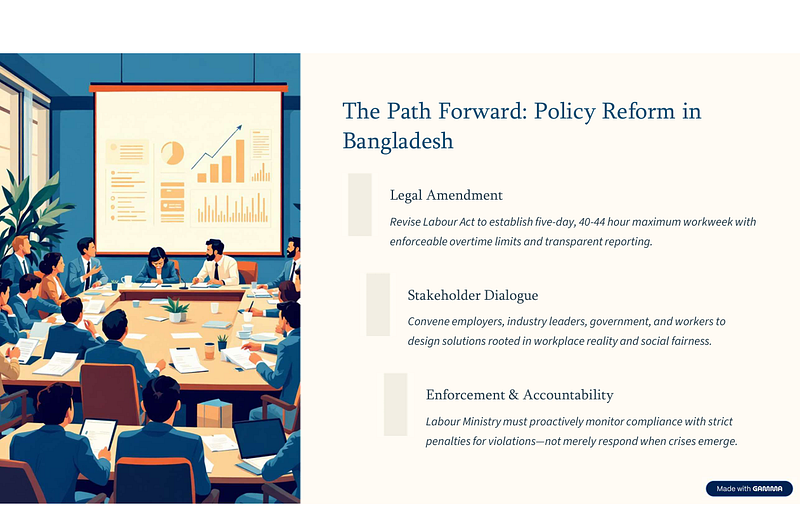
Reform should revise the Labour Act to establish a five-day, 40–44-hour maximum, enforceable overtime caps, transparent reporting, and meaningful penalties for repeat violations. A structured dialogue among employers, industry leaders, government, and workers can ground solutions in operational reality and social fairness. Enforcement must be proactive, not reactive, with the Labour Ministry monitoring compliance before crises metastasize.
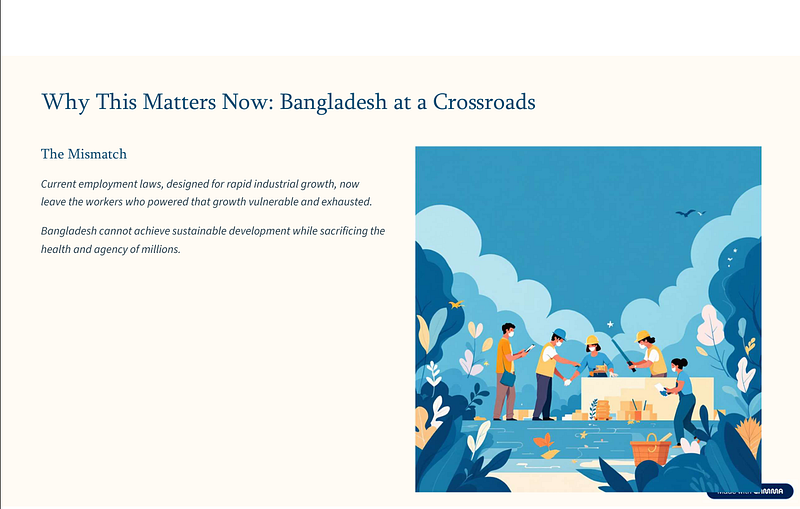
Ultimately, worker wellness is not a cost center — it is the foundation of sustainable prosperity. No employer will cover your medical bills in retirement, and no firm values “loyalty” above human dignity, family time, and health. Bangladesh stands at a crossroads, and the time for evidence-based, humane work-hour reform is now.

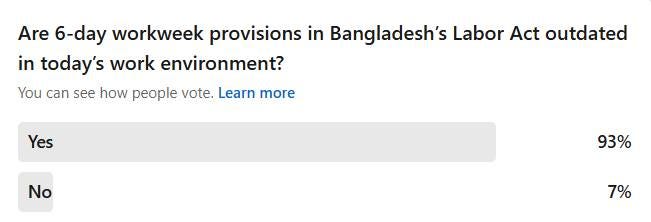
I ran a quick poll on linkedin to research how most people feel about the topic and here are the results, there is 3 days left before this poll closes but I highly doubt the ratio will change much
Written by
Shafqat Aziz
Barrister (of Lincoln’s Inn)
LLM Corporate Law, NTU
PGDL, UWE Bristol
LLB, BPP University
Accredited Civil-Commercial Mediator (ADR-ODR International)
First published by The Business Standard: The price of overwork: How Bangladesh’s six-day workweek is failing its workforce
Comments
Post a Comment